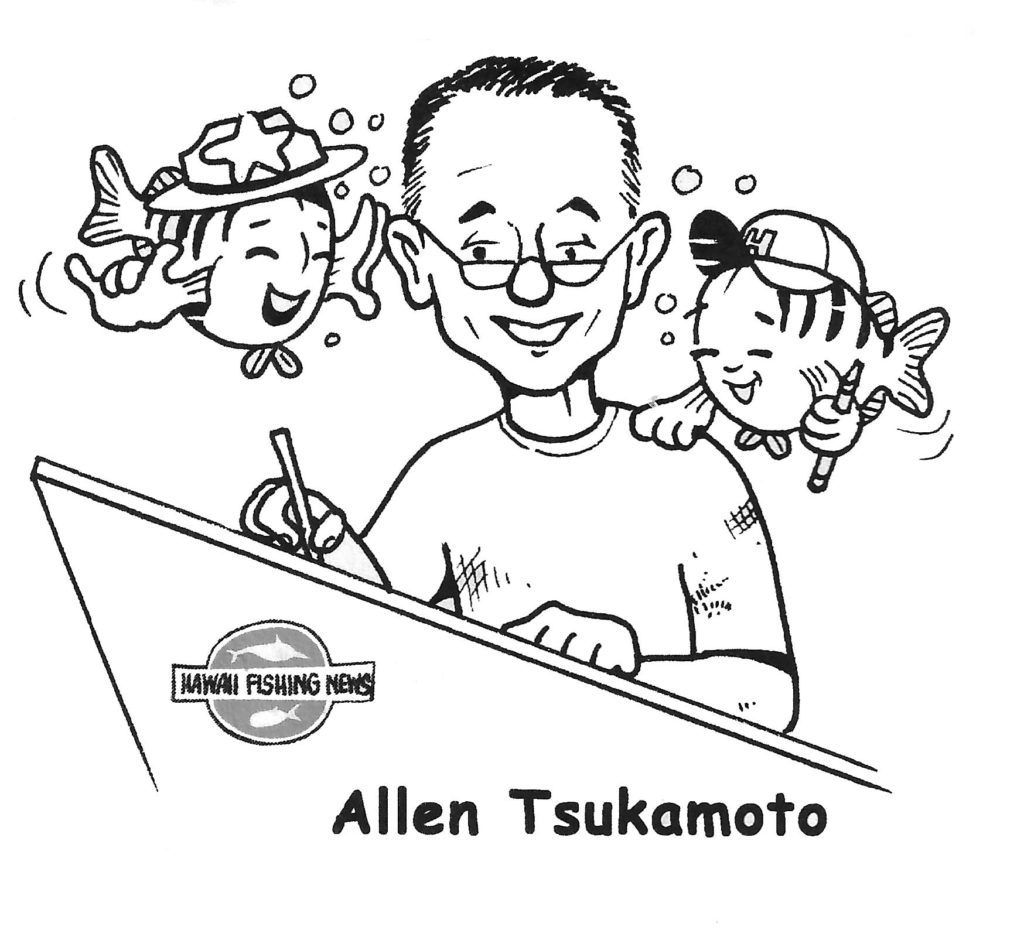
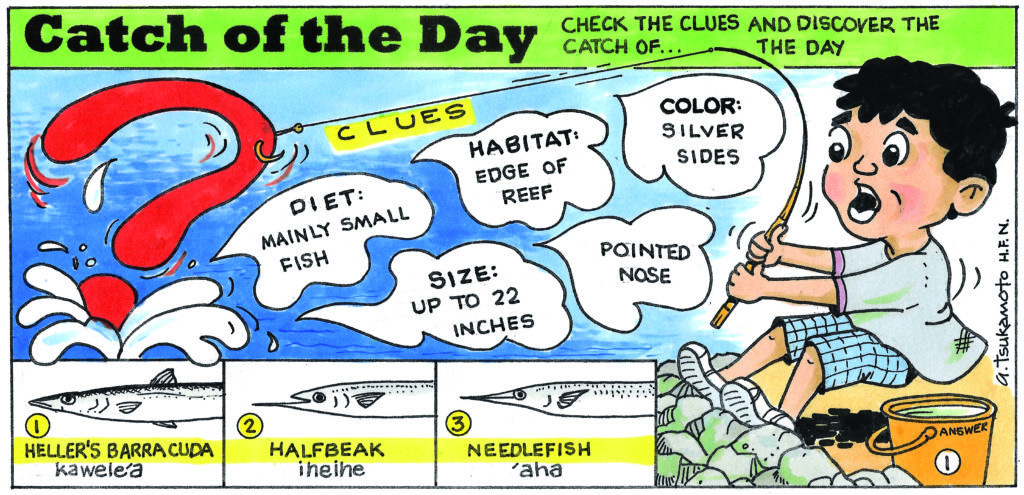
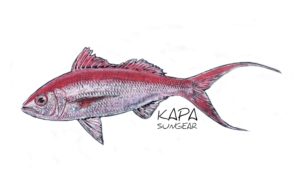
Allen Tsukamoto is a self-trained artist. Born and raised in Hawaii, Allen has always been interested in art, water activities and fishing. After graduating from Farrington High School, he enlisted in the U.S. Air Force where he was able to continue his art as an illustrator technician. After he retired, he volunteered at the Waikiki Aquarium to be around fish people, and get ideas and materials for his many fish jokes. He has been a contributor of fish toons and the Young Angler pages in Hawaii Fishing News since 1979. Allen is a lifelong fish lover who grew up clutching bamboo fishing poles. He continues to read and expand his knowledge of fishy things to encourage all to care for our ocean environment via his fishy cartoons.

Learning how to Fish

For almost everybody… They don’t call it catching, because you don’t always catch fish when you go fishing.
But, with a little knowledge you stand a much better chance of catching fish, and maybe enough for dinner or breakfast.

You need to know about FISHING POLES, RODS, REELS, LINE and BAIT…… and How and WHEN to use each type.
HOW TO TIE KNOTS that won’t come undone, especially when you have that BIG FISH on the line.

Check out this video and more below, to learn all these things, so you will be prepared and ready to catch lots of fish wherever you cast your line.

https://www.takemefishing.org

IGFA’s Free Learn to Fish Course!
The International Game Fish Association ( IGFA ) has a FREE course called “Intro To Fishing” that covers just about all the requirements to earn the Hawaii’s Boy Scouts Aloha Council’s Fishing Merit Badge, so it covers a lot! It’s made up of short, fast moving, well done video clips. You can stop and return to the same place at any time. I think you will find it fun, entertaining, and educational.

The goal of the IGFA Online Angling Education Resources is to provide young and/or novice anglers with a strong foundation of angling knowledge in a comfortable, virtual setting that will give them the confidence to get out and go fishing in a responsible and ethical way. After you check out this video, look for more videos from IGFA.

https://learn-to-fish.igfa.org/courses/intro-to-fishing

Intro to Fly Fishing by the IGFAIn this video, the IGFA travels around Florida, not Hawaii unfortunately, to show the diverse angling habitats where one can fly fish. Basic fly fishing instructions this video occurs at a park where the IGFA attempts to catch freshwater fish on fly. Watch out for the alligators in this video! Lucky we are fishing in Hawaii, with no alligators, and where we can fly fish in the ocean, and freshwater locations too!

AT SOME POINT SOON you will be prepared…… AND SO LET’S GO FISHING !!!!!…. That means going fishing out at the beach or on a boat, or at a lake, reservoir or stream.

Do you already KNOW WHAT FISH YOU CAN FISH FOR? WHAT FISH CAN YOU KEEP? Check out the HAWAII FISHING NEWS Monthly Moon and Tide Almanac. It includes what fish are biting each month, what fish are kapu (out of season because of breeding or other fisheries management reasons), and all the local fishing, netting and diving regulations and size limits that you will wan to be aware of.

Hawaii’s young anglers don’t need a license to fish at the beach in Hawaii, but you may need to get one for freshwater fishing or on a boat. Check out our link to all the regulations to check out what you might need before you go.

HOW ARE YOU GOING TO DECIDE WHAT TO KEEP? and if you keep it, can you clean it , cook it, and BEST OF ALL EAT what you keep and cook.

What happens if you get “HOOKED”?
We think this YouTube video is pretty clear for you to learn how to remove a hook, and without any ads, but we are working on making one ourselves for you – check back with us!
In the meantime, you have the video from Colonial Healthcare, and also this HAWAII FISHING NEWS article from HFN writer and Boy Scout volunteer fishing teacher Stan Wright, both showing how the String-and-Snatch method works to easily and safely remove a hook. The article is helpful to print out and look at and share anytime at home or anywhere you may need it.

You will also need to think about SAFETY. We recommend watching the safety video from TakeMeFishing.org so we have included it on this page.